Imagine you are in court alone without a lawyer, making complex arguments on behalf of yourself and your co-inventor, as to why the patent office made a mistake in rejecting your patent application. Specifically that your invention is patent eligible. Everyone opposing you is a paid professional. It is not hard to see that the odds are long. Now, imagine you win. The judge returns the matter to the patent office for reconsideration using purposive construction. This is rare, and yet it has just happened.
Background
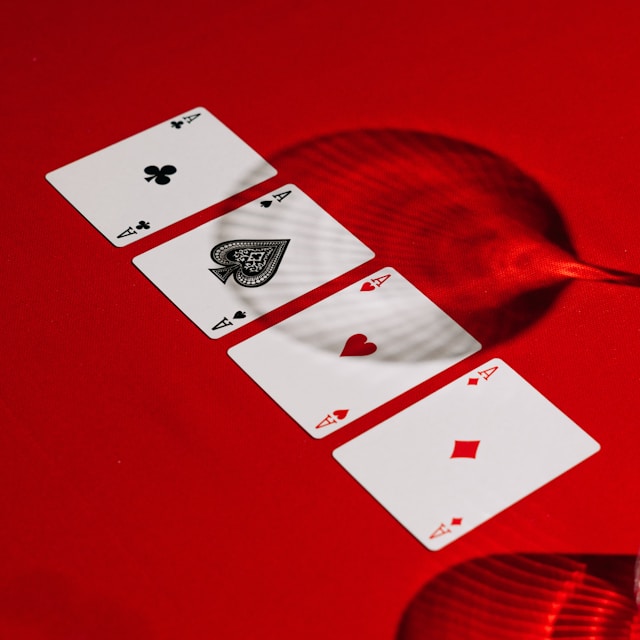
Barry and Wyatt Dusome, a father and son, filed a patent application in 2008 for a card game played with conventional cards or computer-generated images of cards. The examiner rejected their Canadian application No. 2,701,028 with a final rejection in 2018. The inventors filed an appeal with the Patent Appeal Board (PAB), which makes recommendations to the Commissioner of Patents.
This “Commissioner Decision” released in 2024 found the “actual invention” to be “the rules for a new poker game to be played with conventional physical playing cards” or played with “a well-known computerized implementation with a display of images of playing cards.” See Barry Dusome & Wyatt Dusome (Re), 2024 CACP 11.
To reach this decision, PAB, in their advice to the commissioner, engaged in a practice that patent agents have repeatedly complained about. The PAB members don’t properly construe the claims before assessing validity.
Purposive Construction
Construction is a topic that bores many people, but it is at the heart of the patent system. To enforce a patent, the claims must be given meaning and the essential elements identified.
For decades, the law has been that construction precedes determining validity. Purposive construction is the method Canadian courts use to interpret patent claims by identifying, from the viewpoint of a person skilled in the art and considering the specification, which claim elements the patentee intended to be essential to the monopoly and which are non‑essential. The process gives meaning to words in the claims in the sense the inventor is presumed to have intended, and in a way that is sympathetic to the accomplishment of the inventor’s purpose expressed or implicit in the text of the claims.
For more on purpose construction, see
- Free World Trust v. Électro Santé Inc., 2000 SCC 66 (CanLII), [2000] 2 SCR 1024.
- Whirlpool Corp. v. Camco Inc., 2000 SCC 67 (CanLII), [2000] 2 SCR 1067
The patent office cites the law on “purposive construction” and identifies essential elements, but they often fail to give meaning to the terms used in the claims. Next, for claims they regard as ineligible, they then ask a further question: “What is the actual invention?”. The determination of the actual invention is no longer based on the essential elements of the claim. That is, they assess validity, and then do construction – purposive-lite and ask what is the actual invention. It is not as unfair as working backwards from a conclusion, but it subjects applications for Computer-Implemented Inventions (CIIs) to a different standard which is unfair.
The Applicants Go All In
The applicants appealed to the federal court and represented themselves. They won.
The Court found the Commission must use proper purposive construction. That is, identify the purpose of ordinary skill in the art, give meaning to the claims, and classify the elements as essential or not. Then, based on the construed claims, determine validity. It is not permissible to ask what the actual invention is without purposive construction.
The Honourable Allyson Whyte Nowak, J., found four faults with the commissioner’s decision. “[22] Commissioner committed several errors. (1) The first error: a failure to properly construe the claims … [27] The hallmarks of purposive construction are missing. [28] First, there is no attempt to isolate and give meaning to descriptive words and phrases employed in the representative claim in order to identify the elements of the invention of the claim as contemplated by the inventor and which define the subject matter of the claims. …”
The judge continued “[32] The Commissioner’s failure to ground his determination of the actual invention of the 028 Application in a purposive construction of the claims was intentional: the Commissioner stated in the Decision that, ‘[w]hile there is no second step to purposive construction, the courts have not ruled it impermissible to determine the actual invention as distinct from the essential elements of the construed claims.’ This is contrary to Amazon and is an error of law (Amazon at para 47, Choueifaty at para 22).”

At para 32. “The second error: the improper assessment of subject-matter patentability based on the actual invention of the 028 Application”. At para 43, writing about the “third error” being improper application of the actual invention question, the judge continued, “the exercise of purposive construction ensures that the question of what constitutes new knowledge is considered in an informed way”.
The reasons explain why the commissioner erred in applying the law of eligible subject matter. For example, the commissioner applied the test in Lawson when the correct test is from the Shell Oil case. Since 2010, the commissioner has cited Lawson eight times and Shell Oil 18 times. See
- Lawson v Commissioner of Patents, (1970), 1970 CanLII 1879 (CA EXC), 62 CPR 101 (Ex Ct)
- Shell Oil Co v Canada (Commissioner of Patents), 1982 CanLII 207 (SCC), [1982] 2 SCR 536.
The commissioner cited a decision of a previous commissioner from 1999. The fact that the commissioner in that case found a poker game described in that patent application was not “art” was “not a valid basis for finding that the invention of the 028 Application does not meet the definition of `art’ as each case turns on its own facts”.
The case was returned to the patent office. (On 2026 March 24, the patent office issued a practice notice on purposive construction. And in May issued an initial determination rejecting the application again. In view if CIPO’s history, the practice note, and the application this rejection was expected.)
Observers of the PAB have seen this Movie Before
CIPO misapplies the law. The applicant appeals. The court returns the case to the patent office. This happens a lot in CII inventions.
On subject matter:
- Amazon.com Inc., Re, CD 1290, Amazon.com, Inc. v. Canada (Attorney General), 2010 FC 1011, 2011 FCA 328
- Choueifaty, Yves (Re), CD 1478; Yves Choueifaty v Attorney General of Canada, 2020 FC 837; Choueifaty (Re), 2021 CACP 3
- Benjamin Moore & Co. (Re), CD 1535, 2020 CACP 15; Benjamin Moore & Co. v. Canada (Attorney General), 2022 FC 923; 2023 FCA 168; Benjamin Moore & Co (Re), CD 1690, 2025 CACP 9
- Benjamin Moore & Co. (Re), CD 1536, 2020 CACP 16; Benjamin Moore & Co. v. Canada (Attorney General), 2022 FC 923; 2023 FCA 168; Benjamin Moore & Co (Re), CD 1691, 2025 CACP 10
- Barry Dusome & Wyatt Dusome (Re), CD 1670, 2024 CACP 11; Dusome v. Canada (Attorney General), 2025 FC 1809
On other matters:
- The Coca-Cola Company v. The Attorney General of Canada, 2023 FC 424. CIPO erred in claim construction and obviouness analysis.
- AbbVie Biotechnology Ltd. v. Canada (Attorney General) 2014 FC 1251. CIPO erred in rejecting claims for a dosage regime. CIPO later issued PN 2015-01
- Bartley v. Canada (Commissioner of Patents) 2011 FC 873; CIPO erred on procedural grounds.
We have been dealing with this issue for two decades. The One-Click patent case was filed in 1998, and the final office action arrived in 2004. Some cases were allowed after Choueifaty. But PAB has largely stopped allowing CII claims. See, for example, the colour picker cases of Benjamin Moore. So we don’t expect much to change.
More Information on the Patent Appeal Board
If you want to learn more about rejections by the PAB or how to patent CII in Canada, see Abstract ideas need not apply: Cracking the code of Canada’s patent eligibility requirements.
More on Poker Inventions
PAB and the commissioner have looked at a few card games.
- Progressive Games (Re) CD 1221, 1997 (CA CP); Progressive Games, Inc. v. Canada (Commissioner of Patents), 1999 CanLII 8921 (FC)
- IGT (Re), CD 1346, 2013 (CA CP)

Conclusion
These are complex topics, and we hope this post provides some insight into why we approach things in the way we do. If you would like to discuss protecting your invention with a patent application, please contact us.